NYERI, Kenya - Esther Nyambura never imagined that a simple request for cooking gas money would become her final conversation with her son.
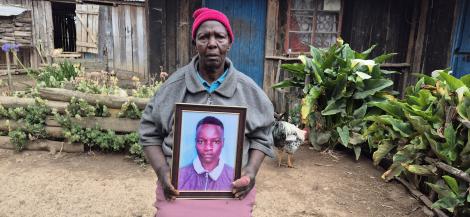
From her home in Bagdad village, Kieni, Nyeri County, the 75-year-old recalls every detail of that phone call. Two days before the June 25, 2025 anti-government protests, her son, Peter Mwangi, reached out. He had earned KSh500 from his industrial attachment and needed another KSh650 to refill his cooking gas cylinder.
"I sent him what I could," she says quietly. "I didn't know it would be the last time I would ever hear his voice."
Peter, a second-year student at Nyeri National Polytechnic, was building a future that both mother and son had worked tirelessly to achieve. Like many young Kenyans, he balanced his studies with practical training, determined to create a better life.
On the afternoon of June 25, Esther tried calling him three times. There was no answer.
Concerned, she contacted his roommate, who told her Peter had gone into Nyeri town. As the hours passed, her anxiety grew. She spent the entire night repeatedly calling his phone, hoping he would answer.
He never did.
The following morning, the news she had feared arrived.
Peter had died during the protests in Nyeri town.
"My heart shattered," Esther says. "He was my only hope."
Although Peter was not her biological child, their bond was inseparable. Esther adopted him when he was just three years old, raising him as her own. From the beginning, he called her "Mum."
"I never had children of my own," she says. "He became my whole world."
Everything she had was invested in giving him opportunities she never had.
"I sold the only piece of land I inherited from my father so I could educate him. I sacrificed everything because I believed in his future."
Instead, she found herself planning his burial.
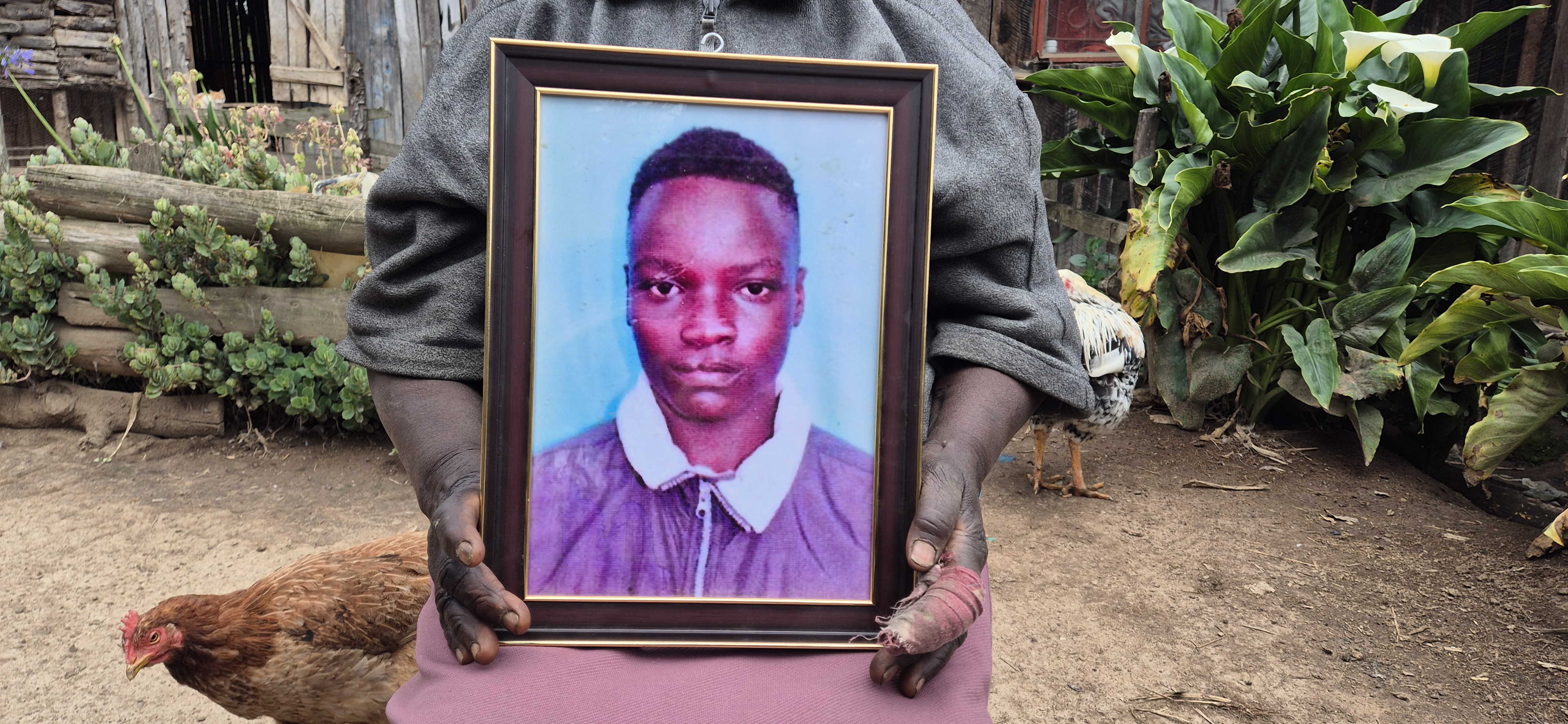 A postmortem examination conducted at Nyeri County Referral Hospital concluded that Peter died from massive intracranial haemorrhage and severe head injuries caused by blunt force trauma to the skull. According to the report, he sustained three blows to the head and another to his back.
For Esther, the findings raise troubling questions.
"Those injuries don't look accidental," she says. "They look deliberate."
Yet, despite her search for answers, she says she has encountered denial instead of accountability.
"The police told the media they were not responsible for my son's death," she says. "But if it wasn't the police, then who killed him?"
She points to another fatality reported in the same area on the same day, where another individual was allegedly shot dead by police during the demonstrations.
"I just want the truth," she says. "Who is responsible for my son's death?"
Today, Esther faces another battle—one against age, illness, and isolation.
At 75, she lives alone and struggles with arthritis, requiring frequent hospital visits. Without Peter, she says, she has lost not only a son but also her companion, caregiver, and source of hope.
"I gave up everything for him," she says. "Now I am left with nothing."
Her plea is simple but profound.
"I want justice for my son. But I am old, I am alone, and I have no one to help me. Who will help me find justice?"